
`Going Green’ While ‘Staying in the Black’: Strategic Pivot of Oil and Gas companies Towards Sustainable Energy
– By Arpit Agarwal, Investment Partner at Blume Ventures, specializing in Climate Tech and Deep Tech

The India Energy Week, which concluded recently in Delhi, is one of India’s most prominent government-backed conferences on sustainable energy. It aims to, ”convene energy leaders, policymakers and innovators from around the world to address the sector’s most pressing challenges and drive actionable solutions for a sustainable energy future.”
What is interesting is that the key sponsors of this event on sustainable energy are largely oil and gas companies. Moving past the paradox and considering their perspective, it is clear that it reflects a delicate balancing act between their traditional business and finding their place in an increasingly “green” world order.
The Times, They Are A-Changin’
For most part of the 20th century, oil and gas companies have been the powerhouses driving the global economy, bringing unprecedented levels of wealth to their shareholders and to their countries that can export it in abundance.
In the past few decades, we all have had to come to grips with the finite nature of this resource, and it’s inevitable impact on the climate. As this understanding has deepened, consumer sentiment has also shifted dramatically – from being viewed as the bringers of progress, oil and gas companies are increasingly unpopular among voters and consumers alike.
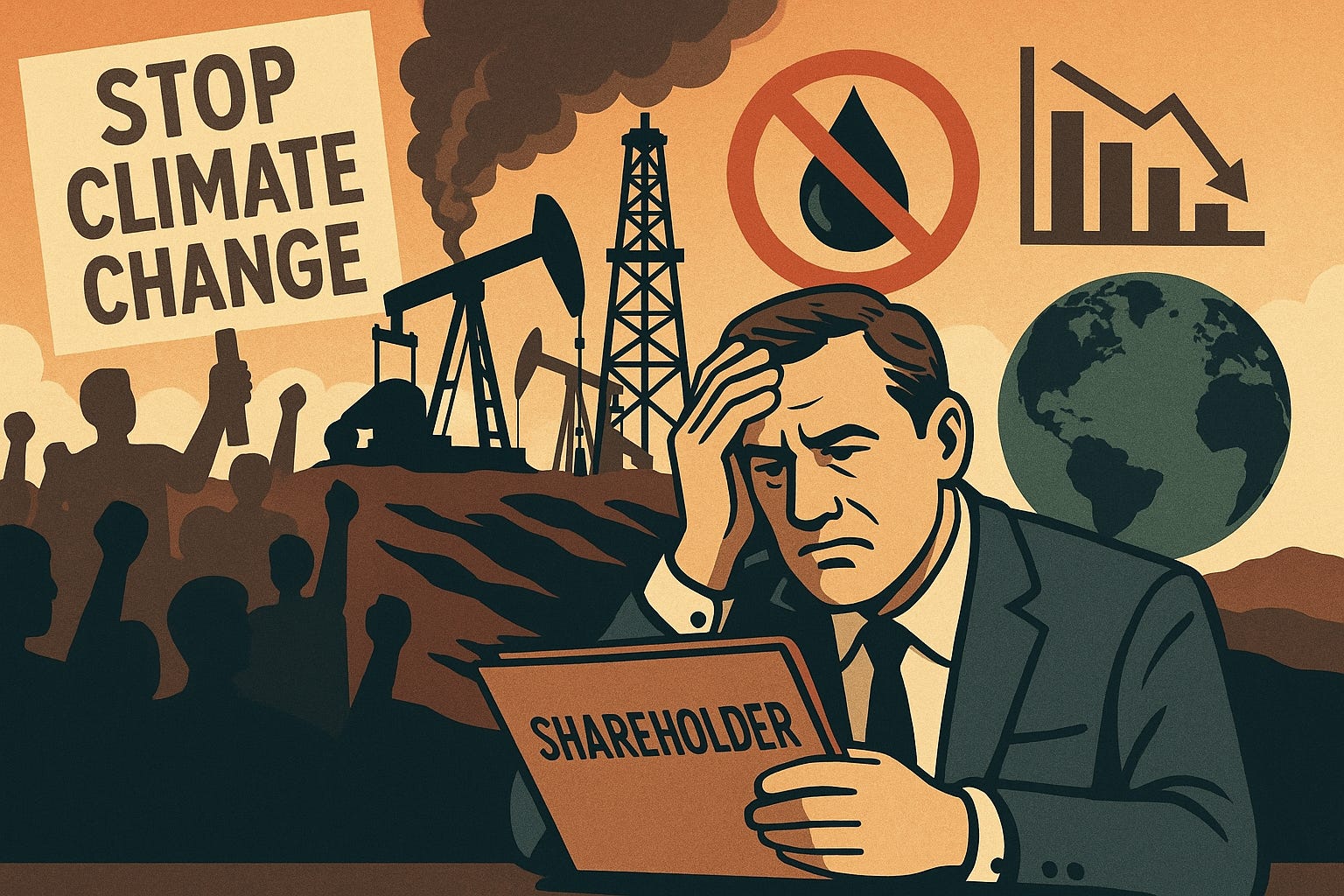
Furthermore, there is growing pressure to achieve the carbon emission targets on nations, and oil and gas companies are expected to play a major role in supporting the energy transition needed to hit these goals on time. In this context, shareholders of these companies face a peculiar dilemma – how to maintain their returns while navigating the existential challenges to the traditional business model.
The Balancing Act Towards Going Green
Almost every major player has announced net-zero targets for the 2030s or 2040s. While critics accuse them of greenwashing, there is more nuance that drives these decisions.
The reality is that as the global economy continues to grow, so do its energy demands. Currently, there simply aren’t enough 24×7 renewable energy sources. While the share of renewable energy in power generation is likely to go from 30% in 2023, to reach 46% in 2030, we will continue to be highly dependent on fossil fuels. In fact, the global oil demand is expected to actually increase to 106 million per day, higher than the 102 million barrels per day demand seen in 2023.
While the market isn’t growing, it is continuing to be pretty large for some time to come. This creates an interesting dynamic where oil companies cannot afford to give up on the “black” business in favor of moving entirely toward the “green”. As per the IEA, clean energy investments by the oil and gas industry in 2022 stood at around $20 billion, close to 2.5% of its total capital spending. But this number must go to 50% by 2030 to meet the objectives laid out in the Paris Agreement, not counting the additional investment for reducing emissions from their own operations.
At the same time, several larger oil and gas companies have declared a net zero target in the 2030s or 2040s. A significant part of their gains can come from making their operations more efficient using newer technology, flare reduction and reducing their methane footprint. But the biggest gains will require significant investments in “non-core” businesses like solar power, electric vehicles and hydrogen fuel cells. They know their long-term survival is dependent on their move towards renewables.
The Path Forward: Innovation and Integration
One key challenge is also finding the right avenues to make these investments. This is where conferences such as India Energy Week and COP play a crucial role in companies. They also become key venues for policy influence and technology discovery. For example, Carbon Clean, a carbon capture company, received $150 million in funding from Chevron in 2023.
I believe there is ample scope to transform this challenge into a catalyst for change. The key lies in creating frameworks that align with the survival instincts of these companies with global climate goals, potentially through structured programs where these companies fund early-stage cleantech innovation through grants, support startups, and help build research capacity in emerging economies.
Consider introducing an “Innovation Offset” mechanism – allowing oil companies some flexibility in emission targets in exchange for direct investment in climate tech innovation. This approach could create a powerful funding channel for next-generation clean technologies while providing a pragmatic transition path for traditional energy companies.
The Road Ahead
The transformation of oil and gas companies presents both risks and opportunities. While their involvement in climate discussions is sometimes criticized, it also creates valuable opportunities for collaboration and innovation. However, success will require balancing different interests—shareholders seeking profits, societies demanding environmental responsibility, and businesses needing reliable energy. The companies that manage this transition well will likely become leaders in the new energy economy.